Upload Your Résumé Once, Get a Cover Letter for Every Company
Upload your résumé once and get a résumé tailored to each job plus a cover letter written to each company. What makes a cover letter specific, and how it works.
Most people have one résumé and one cover letter, and they send both everywhere. Not because they do not know better, but because rewriting them for every company is exhausting. By the fifth application, "Dear Hiring Manager, I am excited to apply" starts to look good enough.
AI Apply Jobs is built around a simple idea: you give us your résumé once, and we do the rewriting. Every employer gets a résumé tailored to their job and a cover letter addressed to their company. This article explains how that works and what actually makes a cover letter specific, so you can judge ours, or write your own.
Step one: give us everything, once
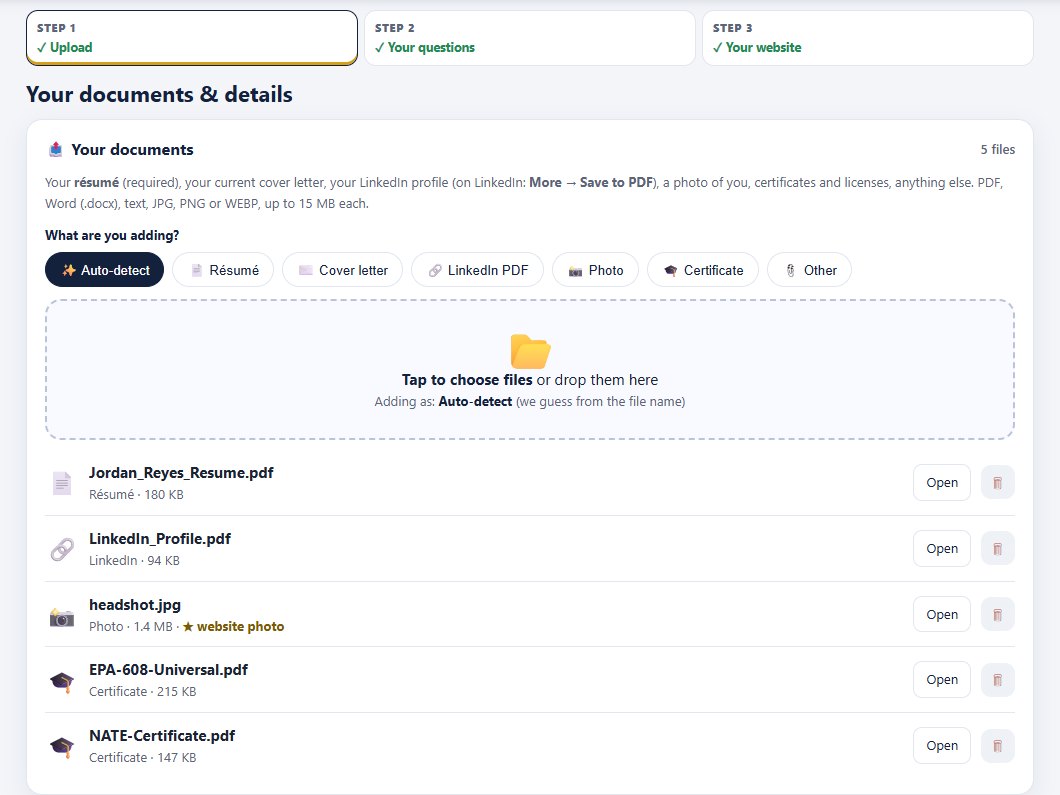
The only thing you must upload is your résumé (PDF or Word). Everything else makes the result better:
- Your current cover letter, even an old one, so the AI can learn how you write
- Your LinkedIn profile as a PDF (on LinkedIn: More, then Save to PDF; we never log in to your LinkedIn)
- A good photo of you for your hiring website
- Certificates and licenses: EPA 608, CNA, RN license, CDL, forklift, QuickBooks, PMP, anything you have earned
- Notes about the job you want, when you can start, and anything the résumé does not say
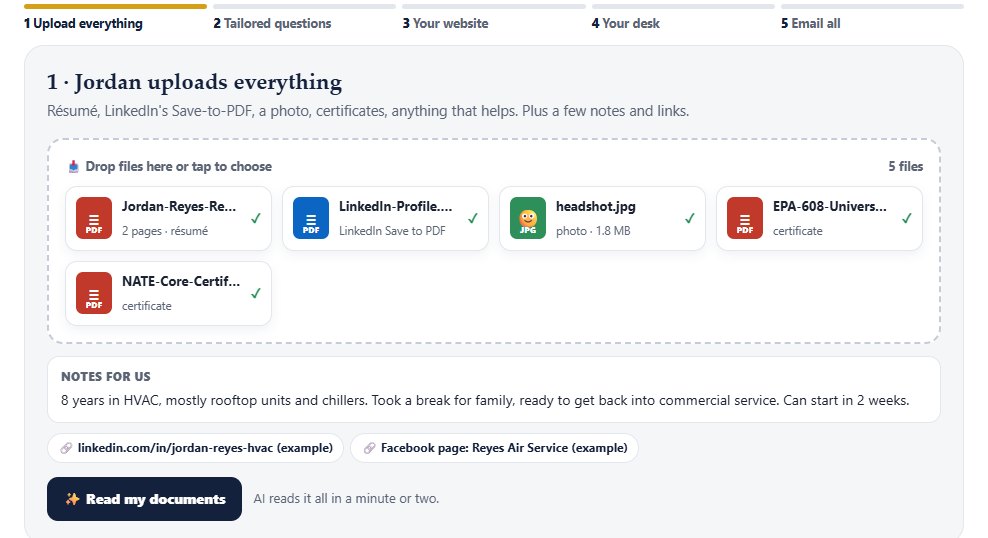
As soon as your files are in, the AI reads all of them together. That is the point of uploading once: it is not reading one document, it is reading your whole working life at the same time.
Step two: questions about your background, not a form
After reading, the AI asks a few questions written for you. If your résumé lists Trane and Carrier chillers but no years, it asks how much chiller work you have done. If your certificate says QuickBooks Certified User, it asks how deep that experience goes. If you list both medical ICU and step-down time, it asks which unit and shift you want.
These answers end up in your letters. "Three years on centrifugal and screw chillers, including annual teardowns" is the kind of sentence that gets a service manager to pick up the phone, and it only exists because someone asked.
The more you tell us, the more specific every letter gets. Details are the whole game.
What makes a cover letter specific
Before we show you ours, here is the test we hold every letter to. You can use it on any cover letter, including one you write yourself.
1. It names the company and the job
Not "your organization". The company's real name and the actual title they posted. If there is no posting, it names the kind of role you want at that company.
2. It gives one reason this company fits you
A specific cover letter says why them. Maybe they are family-owned and pay for training. Maybe they are 12 minutes from your house. Maybe their work is exactly the kind you did for five years. One real reason beats three paragraphs of enthusiasm.
3. It leads with what they asked for
If the posting wants rooftop units and on-call rotation, the letter says you have rooftop experience and you are open to on-call. It answers their checklist before they have to look for it.
4. It proves it with a detail only you have
Numbers and names: years in the field, the equipment you know, the licenses you hold, how many people you managed, payroll for 40, a unit you floated in. Generic letters say "hard-working". Specific letters show it.
5. It is short and ends with a next step
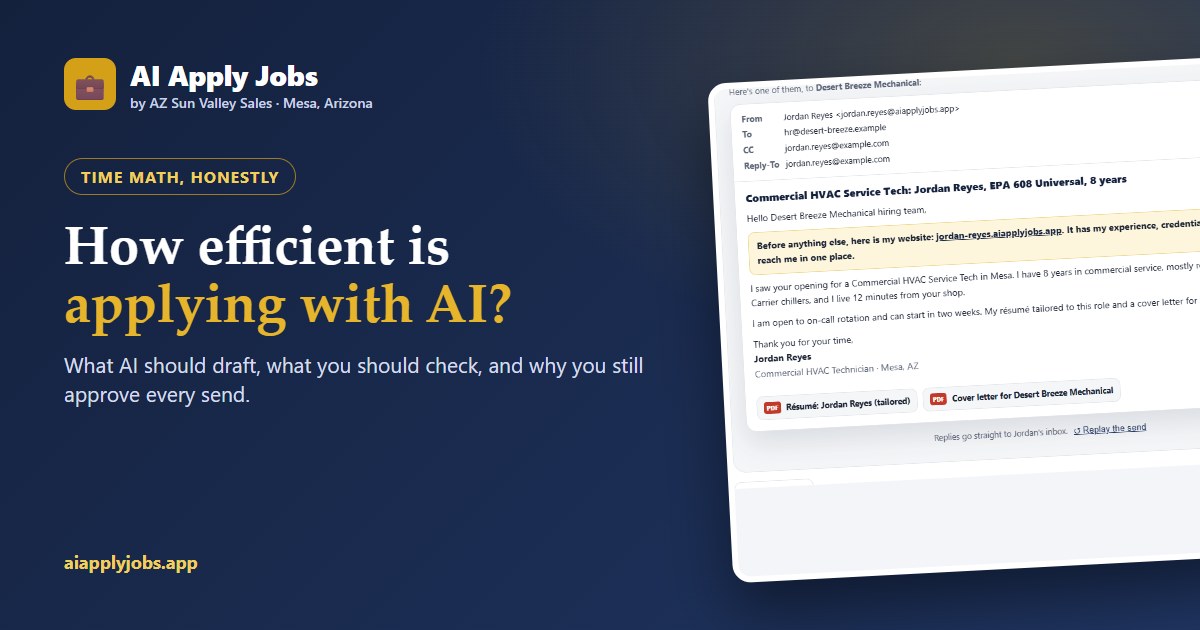
Hiring managers are busy. A few short paragraphs, a thank-you, and an easy way to reach you. Ours also put a link to your hiring website first, so they can see your experience, credentials and résumé in one place.
The tailored résumé that goes with it
Every cover letter travels with a résumé tailored to that job. Tailoring does not mean inventing anything. It means choosing and ordering what is already true:
- The job title and the skills they asked for move toward the top
- Bullets that match their posting come first; ones that do not are trimmed
- Their words are used where they honestly describe your work
- Certifications they care about are easy to spot
Everything comes from your documents and answers. If something is not in there, it does not go on the résumé. You can open every résumé and cover letter, edit anything, and skip any employer before a single email goes out.
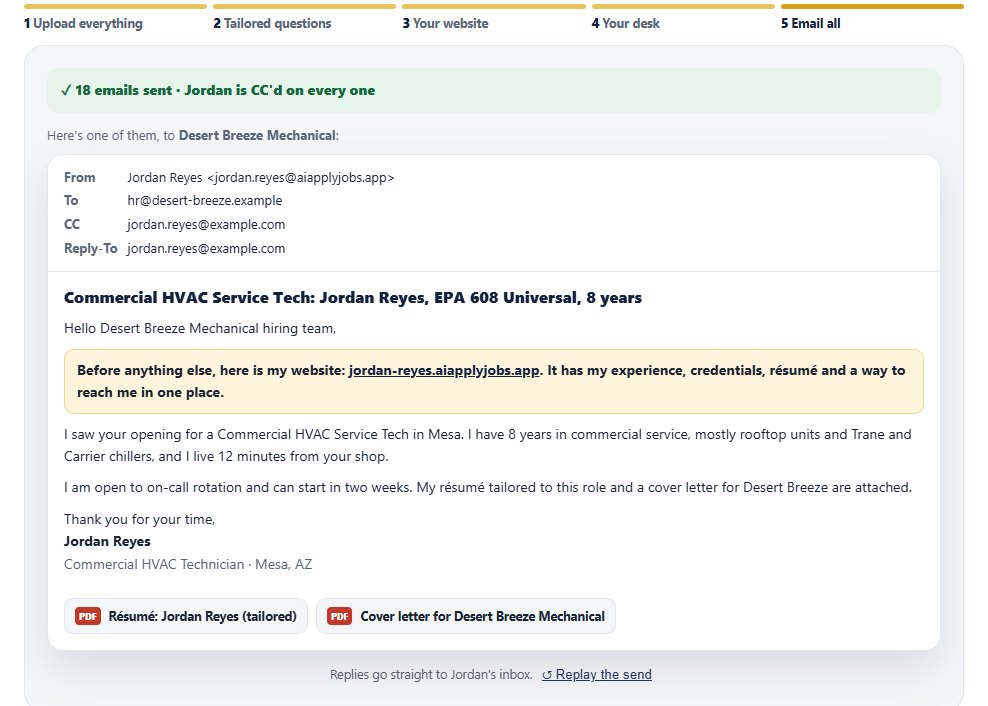
How it all goes out
When you are happy, open Outreach and tap Email all opportunities. Each employer gets one personal email in your name from [email protected], with your website first, the tailored résumé and the cover letter for that company. You are CC'd on every one, and replies go straight to your own inbox. We only use hiring addresses an employer publishes itself, re-checked on the employer's own page.
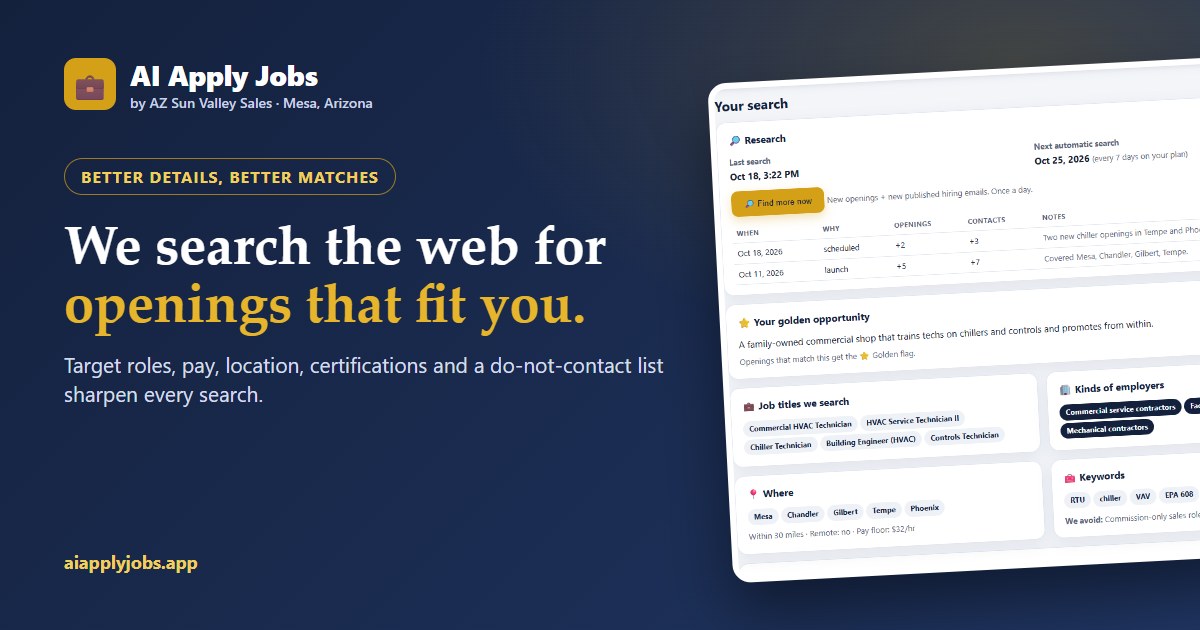
If you want to know how long this takes compared with doing it by hand, we did the time math, labelled as estimates, in How efficient is applying for jobs with AI?. And for how we decide which companies to write to, read How AI finds job openings that fit you.
What it costs
Standard is $99 setup plus $24.99 a month, with a launch campaign of up to 50 tailored employer emails and 25 new employer contacts every month after. Fast Track is $199 setup plus $49.99 a month, with up to 100 at launch, 75 a month after, and a fresh search every week. Cancel any time. Prices as of October 2026; see current pricing.
We cannot promise interviews; nobody honestly can. We can promise that every employer gets a letter that is clearly about them. Questions? Real-person support from the owner, Johnathon Lawson: [email protected].
Frequently asked questions
Do I need a cover letter to start?
No. Your résumé is enough to start. An old cover letter helps the AI match how you write, and certificates, a LinkedIn PDF and notes make every letter more specific.
Will every company really get a different cover letter?
Yes. Each employer gets a cover letter addressed to that company and a résumé tailored to that job. You can open and edit any of them before you send.
Will the AI add skills I do not have?
No. Your website and letters only use what is in your documents and your answers. Read every draft anyway, because AI drafts can contain mistakes, and fix anything that is off.
What if my résumé is out of date?
Upload it anyway and use the notes and the AI's questions to fill in recent work. You can also upload a newer version later and rebuild.